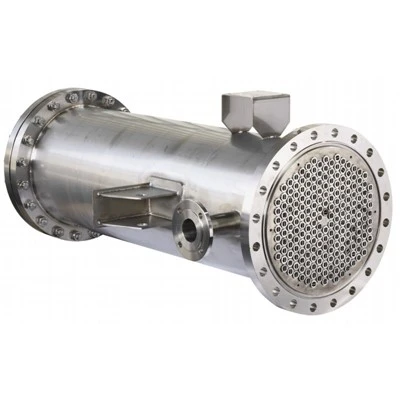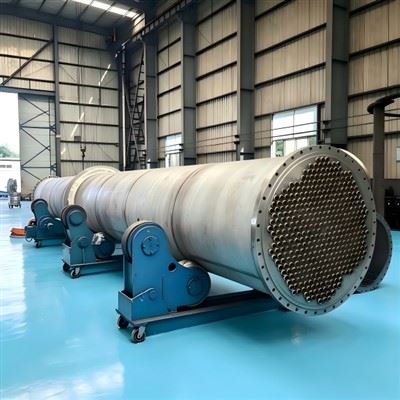

For Which Operating Conditions are Finned-tube Heat Exchangers Suitable?
When heat is exchanged between two liquids, the inherent heat transfer efficiency is already high, and a standard shell-and-tube heat exchanger is sufficient to meet requirements.
The situation is entirely different, however, when one of the media is air or gas.
Because gases have low thermal conductivity, they often become the bottleneck in the overall heat transfer process.
In such cases, increasing the fin surface area improves heat transfer performance, rather than simply increasing the overall size of the equipment.
Applications of Finned-Tube Heat Exchangers
|
Application |
Typical Solution |
|
Air Cooler |
Improve cooling efficiency without increasing equipment size |
|
Flue Gas Heat Recovery |
Recover waste heat and reduce fuel consumption |
|
Boiler Economizer |
Increase boiler thermal efficiency |
|
Natural Gas Heating |
Improve gas heating performance |
|
Process Gas Cooling |
Enhance temperature control for process gases |
|
Waste Heat Recovery System |
Maximize energy utilization |
Factors Affecting the Operation of Finned-Tube Heat Exchangers
|
Design Factor |
Why It Matters |
|
Fin Type |
Determines heat transfer efficiency under different operating conditions |
|
Fin Height |
Affects the effective heat transfer surface area |
|
Fin Pitch |
Balances heat transfer performance and fouling resistance |
|
Tube Material |
Matches temperature, pressure and corrosion requirements |
|
Fin Material |
Influences thermal conductivity and service life |
|
Gas Velocity |
Affects heat transfer efficiency and pressure drop |
Why Don't We Rush to Provide a Price Quote?
Many clients ask right away during their first inquiry: "How much does a finned-tube heat exchanger cost?"
However, any quote is meaningless without first understanding the process parameters.
Factors such as thermal load, operating pressure, temperature range, gas flow rate, fouling tendency, the presence of corrosive media, the need for online cleaning, and installation space constraints all influence the equipment design.
Variations in these parameters directly affect the equipment's structure and manufacturing costs.
That is why GYRO prefers to get the technical solution right first before providing you with a quote.
Technical Specifications
|
Parameter |
Typical Range |
|
Heat Exchanger Type |
Finned Tube Heat Exchanger |
|
Heat Transfer Area |
20–3000 m² |
|
Design Pressure |
Vacuum–12 MPa |
|
Design Temperature |
-40°C to 550°C |
|
Tube Diameter |
Φ19–Φ50 mm |
|
Tube Material |
Carbon Steel / SS304 / SS316L / Duplex Stainless Steel / Titanium |
|
Fin Material |
Aluminum / Carbon Steel / Stainless Steel / Copper |
|
Fin Type |
L-Fin / LL-Fin / KL-Fin / G-Fin / Extruded Fin / Welded Fin |
|
Applicable Medium |
Air, Flue Gas, Steam, Natural Gas, Thermal Oil, Process Gas |
|
Design Standard |
ASME VIII Div.1 / TEMA / GB150 / Customer Specification |
Why are More and More EPC Projects Choosing GYRO?
GYRO possesses comprehensive capabilities in equipment design, manufacturing, installation, and engineering support.
We operate our own 30,000 m² production base, featuring a 20,000 m² manufacturing workshop and a team of over 50 technical engineers.
Beyond supplying individual finned-tube heat exchangers, GYRO can also provide towers, reactors, pressure vessels, and complete process systems, helping you reduce the costs associated with coordinating multiple suppliers.


After-Sales Service and Technical Support
Should issues such as reduced heat transfer efficiency, fluctuations in flue gas temperature, adjustments to medium flow rates, or system capacity expansions arise after the finned tube heat exchanger is put into operation, our engineering team can conduct a fresh thermal analysis based on the latest operating conditions. We will evaluate whether adjustments to operating parameters or optimizations of equipment configuration are required.
For issues confirmed to stem from manufacturing defects within the warranty period, we guarantee a rapid response in accordance with the contract terms and will provide solutions involving repair, replacement, or technical remediation.
For long-term clients, we also offer services such as finned tube bundle replacement, energy-saving retrofitting for legacy equipment, performance comparative analysis between old and new equipment, heat transfer system optimization recommendations for capacity expansion projects, and on-site technical support for EPC projects.
If your project is facing issues such as limited equipment space, low heat transfer efficiency, or rising energy consumption, we invite you to share your process parameters with us.
Based on your specific media, thermal load, installation space, and operational requirements, GYRO will evaluate the suitability of a finned-tube heat exchanger for your application and provide a comprehensive, one-stop solution-covering everything from design and manufacturing to installation and EPC services.
Hot Tags: finned tube heat exchanger, China finned tube heat exchanger manufacturers, suppliers, factory, Column Bottom Product Heat Exchanger, Exhaust Gas Heat Exchanger, Feed Product Heat Exchanger, heat exchanger, Industrial Heat Exchangers, Threaded Tube Heat Exchanger