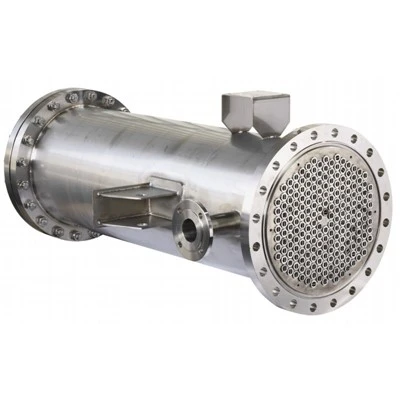

When your heat exchanger begins to underperform after a year of operation, the real issue often lies not with the equipment itself, but with the tubes. Many clients contact us for the first time not because they are building a new plant, but because their existing heat exchanger has become increasingly inefficient.
Initially, the equipment operates normally.
However, after six months, the following issues often emerge:
- Steam consumption rises steadily;
- Achieving the required outlet temperature becomes increasingly difficult;
- The rate of tube bundle fouling accelerates;
- Shutdowns for cleaning become more frequent;
- Each shutdown disrupts the entire production line.
Many people's first reaction is to wonder: Is the heat transfer area insufficient?
In reality, for many applications involving high-viscosity or fouling-prone fluids, the true limiting factor for performance is not the surface area, but the structure of the heat transfer tubes themselves.
This is a key reason why an increasing number of companies in the chemical, refining, and fine chemical industries are adopting threaded tube heat exchangers.
Is Threaded Tube Heat Exchanger Right for Your Application
|
Process Condition |
Common Problems with Conventional Tubes |
Benefits of Threaded Tube Design |
|
High-viscosity fluids |
Low heat transfer efficiency due to weak fluid turbulence |
Enhanced fluid mixing improves heat transfer performance |
|
Fouling-prone media |
Frequent fouling leads to reduced efficiency and more shutdowns |
Slows fouling buildup and extends continuous operating cycles |
|
Continuous production plants |
Unplanned downtime results in significant production losses |
Improves operational reliability and reduces maintenance interruptions |
|
Energy-saving retrofit projects |
Steam consumption continues to increase over time |
Improves heat recovery and helps reduce utility costs |
|
Limited installation space |
Difficult to increase heat transfer area |
Achieves higher thermal performance within a compact footprint |
Total Cost of Ownership Comparison
|
Cost Factor |
Conventional Smooth Tube Heat Exchanger |
Threaded Tube Heat Exchanger |
|
Heat Transfer Performance |
Gradually decreases as fouling develops |
Remains more stable during long-term operation |
|
Steam Consumption |
Increases over time due to reduced efficiency |
More stable energy consumption and improved heat utilization |
|
Cleaning Frequency |
More frequent maintenance and cleaning |
Longer cleaning intervals under suitable operating conditions |
|
Unplanned Downtime |
Higher risk of production interruptions |
Improved equipment availability and process stability |
|
Overall Operating Cost |
Increases throughout the equipment lifecycle |
Lower long-term operating and maintenance costs |
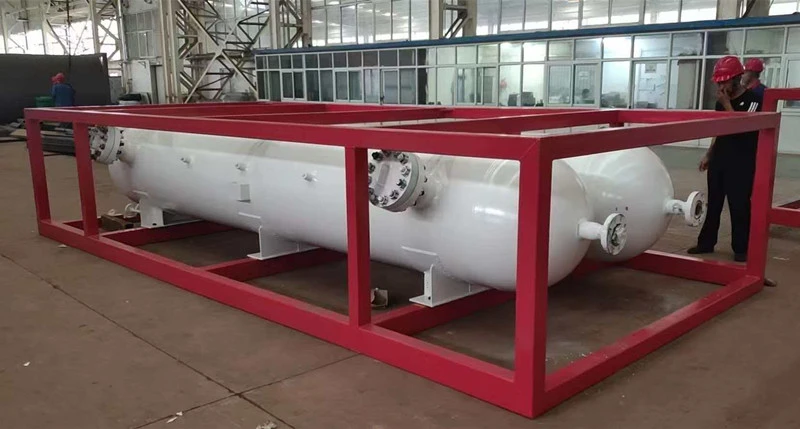

How We Evaluate Your Project
|
Information We Need |
Why It Matters |
|
Process Fluid |
Determines material selection and heat transfer characteristics |
|
Flow Rate |
Used to calculate heat duty and equipment sizing |
|
Operating Temperature |
Determines thermal design and heat recovery potential |
|
Operating Pressure |
Ensures mechanical design complies with process requirements |
|
Fouling Characteristics |
Helps determine whether threaded tubes are the best solution |
|
Allowable Pressure Drop |
Optimizes the balance between heat transfer efficiency and flow resistance |
|
Existing Equipment Drawings (if available) |
Supports retrofit design and minimizes site modifications |

GYRO places greater emphasis on post-delivery performance.
For many equipment suppliers, the project is essentially over once the equipment is shipped.
In our case, the partnership truly begins when the equipment enters operation.
Should issues arise during operation-such as reduced heat transfer capacity, increased energy consumption, changes in operating conditions, or the need for higher production output-we analyze the equipment's status based on real-world operational data rather than simply recommending a new purchase.
For projects requiring capacity expansion or energy-efficiency upgrades, we can develop enhancement plans tailored to your existing equipment, helping you boost overall heat transfer efficiency while retaining as much of the original system as possible.
Every unit is designed with the specific operating conditions in mind.
At ZIBO GYRO, when our engineers take on a project, they do not simply ask for the required heat transfer surface area.
Instead, we focus on questions such as:
Why did the performance of the previous threaded tube heat exchanger deteriorate over time?
Which medium is most prone to fouling?
How often is a shutdown required for cleaning?
What is the primary source of current energy consumption?
Are there plans for future production expansion?
Only by understanding these details can we determine:
Whether a threaded tube heat exchanger is the right choice;
Whether the flow path structure needs adjustment;
Whether material changes are required;
Whether the heat transfer area needs to be recalculated;
Whether the unit can directly replace existing equipment.
Rather than simply providing a standard quote, we aim to deliver a solution that is truly tailored to the specific operating conditions of the site.
You provide the process parameters; we deliver the truly suitable solution.
If you are evaluating whether a threaded tube heat exchanger is right for your project, simply provide the following information:
- Fluid name
- Flow rate
- Operating temperature
- Operating pressure
- Fouling tendency
- Allowable pressure drop
- Existing equipment drawings (if available)
Our engineering team will assess the suitability of a threaded tube design based on your specific operating conditions and provide a comprehensive package covering thermal calculations, equipment design, manufacturing, installation, and EPC services.
Rather than simply purchasing a heat exchanger, why not first identify the root cause of any decline in heat transfer efficiency? GYRO is ready to work with you-starting from your specific operating conditions-to find a more cost-effective and reliable solution.
Hot Tags: threaded tube heat exchanger, China threaded tube heat exchanger manufacturers, suppliers, factory, Acid Gas Preheater, Industrial Heat Exchangers, Reboiler, Recovery Tower Condenser, Shell and Tube Heat Exchanger, U Tube Heat Exchanger