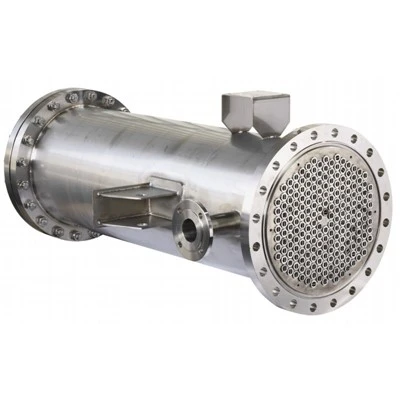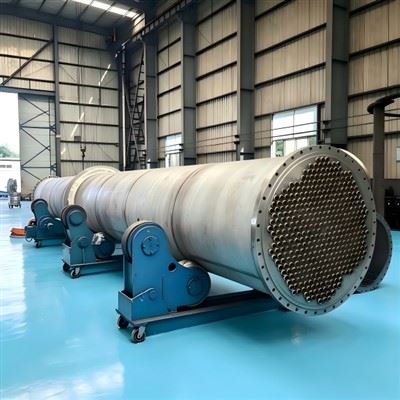

Feed Product Heat Exchanger Specifications
GYRO custom-designs feed-product heat exchanger solutions tailored to process applications, available footprint, material specifications and operating requirements. Our range of feed-product heat exchangers is offered in a wide selection of materials and sizes, suitable for heat recovery, feed heating, product cooling, condensation and reboiling services.
|
Design Item |
Engineering Approach |
|
Exchanger type |
Shell and tube heat exchanger, tube heat exchanger, stainless steel heat exchanger |
|
Process arrangement |
Shell-side and tube-side flow paths selected for the application |
|
Bundle construction |
Configuration selected to suit process conditions and service access needs |
|
Thermal duty |
Sized according to required heat transfer duty and operating conditions |
|
Pressure drop |
Considered during equipment selection for efficient process flow |
|
Design temperature and pressure |
Defined from project process requirements |
|
Nozzles and flanges |
Connection details selected to match project piping and application needs |
|
Materials and dimensions |
Available across a wide range of material and size options |
Feed Product Heat Exchanger Material
Material selection dictates corrosion resistance, service life, cleaning frequency and heat transfer stability. GYRO engineers every feed heat exchanger to match specific process conditions, supplying stainless steel and alternative material options across a full range of dimensions.
|
Component |
Material Selection Consideration |
|
Tubes |
Fluid compatibility, corrosion conditions, and heat transfer needs |
|
Shell |
Process pressure, temperature, and external operating conditions |
|
Tube sheets and baffles |
Mechanical strength, fluid exposure, and long-term reliability |
|
Gaskets and flanges |
Sealing requirements, service conditions, and connection standards |


Feed Product Heat Exchanger Performance
High utility demand, poor temperature cross, fouling, and excess pressure drop can reduce the value of process heat recovery. We support equipment selection for feed product heat exchanger duties based on the operating application, required materials, and equipment size.
A counter-current process exchanger arrangement can improve heat recovery by maintaining a useful temperature difference along the heat transfer path. Final thermal duty, LMTD, overall heat transfer coefficient, temperature approach, and allowable pressure drop must be confirmed against project process data.
|
Performance Factor |
Design Focus |
|
Thermal duty |
Match heat recovery requirements to the process application |
|
Temperature cross |
Consider counter-current flow for effective heat transfer |
|
Pressure drop |
Balance heat transfer performance with pumping demand |
|
Fouling control |
Select suitable geometry and materials for the process fluid |
|
Thermal expansion |
Review exchanger construction for operating temperature conditions |
|
Seal integrity |
Specify suitable flanges and gasket arrangements |
Feed Product Heat Exchanger Benefits
A feed product heat exchanger can support practical heat-management goals where process conditions allow heat recovery. We help customers select equipment that matches the application, material needs, and operating requirements.
|
Plant Objective |
Engineering Focus |
|
Lower utility demand |
Recover available process heat where applicable |
|
Stable feed conditions |
Match the heat exchanger to the required process duty |
|
Lower operating cost |
Use competitive equipment solutions suited to the application |
|
Reduced pumping demand |
Consider flow arrangement and allowable pressure drop during selection |
|
Longer service life |
Select suitable materials and maintain full heat number tracking |
|
Revamps and capacity changes |
Review available materials, sizes, and equipment configuration needs |
Quality Control for Feed Product Heat Exchangers
|
Quality Control Area |
Our Approach |
|
Design requirements |
We review applicable ASME, TEMA, PED, and ISO-related project requirements before fabrication. |
|
TEMA configuration |
Shell, channel, and rear-head arrangements are selected to suit the required process service and maintenance access. |
|
Material traceability |
Full heat number tracking supports clear identification of material used in the exchanger. |
|
Welding documentation |
Fabrication records and welding-related documentation are managed according to the agreed project scope. |
|
Inspection planning |
Required inspection activities, including dimensional and nozzle-orientation checks, are defined with the order requirements. |
|
Final documents |
We dispatch shipping documents quickly and provide agreed documentation for project coordination. |

Documented Manufacturing Support
- Material identification for shell, tubes, flanges, and related components
- Heat number tracking for accountable material records
- Configuration checks for connections, nozzles, and flange requirements
- Documentation support for applicable project standards
- Prompt dispatch of shipping documents
Our manufacturing approach combines skilled production expertise with practical quality control, making it suitable for feed product heat exchanger and process heat recovery equipment projects.
Maintenance of the Feed Product Heat Exchanger
|
Maintenance Area |
Service Consideration |
|
Inspection access |
Select a heat exchanger configuration that fits planned inspection and cleaning needs. |
|
Tube cleaning |
Plan cleaning around process fouling conditions and operating requirements. |
|
Gaskets and flanges |
Check flange and gasket sealing condition during routine maintenance. |
|
Flange replacement |
We provide free replacement for problem flanges. |
|
Preventive planning |
Set inspection intervals based on operating conditions, process fluid, and plant maintenance practices. |
|
Documentation |
Maintain heat number records and shipping documentation for equipment traceability. |
Customized Information on Feed Product Heat Exchangers
|
Engineering Data |
Required Details |
|
Process fluids |
Feed and product names, composition, phase, and physical properties |
|
Flow conditions |
Mass flow rate, viscosity, density, heat capacity, and thermal conductivity |
|
Temperatures |
Feed and effluent inlet and outlet temperatures |
|
Thermal requirement |
Required thermal duty and target temperature cross |
|
Pressure conditions |
Shell-side and tube-side design pressure and design temperature |
|
Pressure drop |
Maximum allowable pressure drop for each process side |
|
Fouling and cleaning |
Fouling factor, corrosion allowance, and required cleaning method |
|
Mechanical design |
Preferred TEMA type, materials, flange standard, and applicable design code |
Hot Tags: feed product heat exchanger, China feed product heat exchanger manufacturers, suppliers, factory, Corrugated Tube Heat Exchanger, Feed Product Heat Exchanger, Reboiler, Shell and Tube Heat Exchanger, Threaded Tube Heat Exchanger, U Tube Heat Exchanger