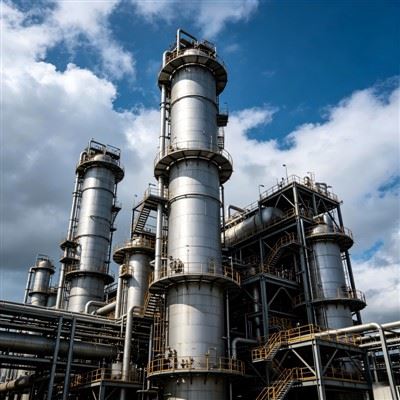
Naphtha Hydrotreating Unit High Pressure Reactor: A Complete Engineering and Manufacturing Guide
How do you select a high-pressure reactor for a naphtha hydrotreating unit? What determines reactor reliability, catalyst performance, material selection, fabrication quality and long-term operating life?
A high-pressure reactor is one of the most critical pieces of equipment in a naphtha hydrotreating unit. Its performance affects catalyst utilization, feed purification, downstream process reliability and the overall safety of refinery operations.
However, selecting a reactor is not simply a matter of specifying operating pressure, vessel diameter and wall thickness. A reliable design must consider the complete relationship between process conditions, hydrogen service, catalyst-bed hydraulics, internal components, material compatibility, welding procedures, heat treatment, non-destructive testing and future maintenance requirements.
For refinery owners, EPC contractors and equipment procurement teams, the real challenge is finding a manufacturing partner capable of translating process requirements into a pressure vessel that can be fabricated, inspected, transported, installed and operated reliably.
This guide explains the key engineering and procurement considerations for a Naphtha Hydrotreating Unit High Pressure Reactor, from process fundamentals to pressure-vessel manufacturing and supplier evaluation.
It is intended for project developers, process engineers, mechanical engineers, pressure-vessel specialists and industrial equipment buyers planning a new unit, replacing an existing reactor or upgrading refinery equipment.
1. What Is a Naphtha Hydrotreating Unit High Pressure Reactor?
A naphtha hydrotreating reactor is a pressure vessel designed to provide a controlled environment for reactions between naphtha and hydrogen in the presence of a catalyst.
The primary purpose of naphtha hydrotreating is to remove or reduce contaminants that can affect downstream processing. Depending on feed composition and process severity, the unit may also saturate olefins and diolefins and convert certain nitrogen- and oxygen-containing compounds.
Typical objectives include:
Reducing sulfur content before catalytic reforming or other downstream catalytic processing.
Reducing nitrogen and other catalyst contaminants.
Saturating reactive olefins and diolefins where required.
Improving feed quality and downstream catalyst protection.
Meeting the required feed specification for the next process unit.
Sulfur compounds are converted primarily into hydrogen sulfide, while nitrogen-containing compounds can form ammonia. These reaction products must be managed by the downstream separation and treating systems.
The reactor therefore operates as part of a complete process unit rather than as an isolated pressure vessel.
Its design must reflect the actual feed composition, hydrogen conditions, catalyst system, process flow rate and downstream product requirements.

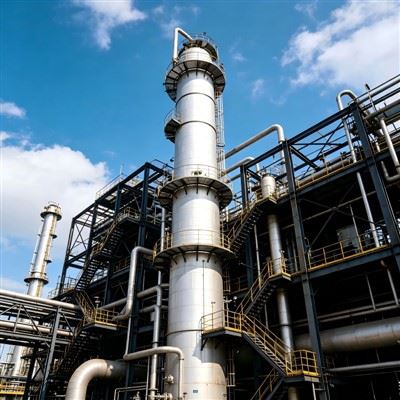
2. Why the High Pressure Reactor Is So Important
In refinery service, reactor reliability affects more than the mechanical integrity of a single vessel.
A reactor problem can affect the entire hydrotreating unit, including feed processing, hydrogen circulation, product separation and downstream catalytic operations.
Three factors make reactor selection particularly important.
2.1 Pressure and hydrogen service
The vessel must withstand the specified pressure and temperature throughout its intended operating envelope. Hydrogen-containing service also requires careful consideration of material behavior, potential damage mechanisms and applicable design requirements.
The appropriate materials and fabrication controls depend on the actual hydrogen partial pressure, operating temperature, fluid chemistry, design code and project-specific materials requirements.
2.2 Catalyst-bed performance
The vessel must accommodate the catalyst and its associated internal components while supporting the intended flow distribution and pressure-drop performance.
A mechanically sound vessel can still deliver poor process performance if the feed distributor, catalyst support or other internals are incorrectly designed or installed.
2.3 Manufacturing quality
Heavy-wall pressure vessels may require demanding plate forming, welding, heat treatment, dimensional control and inspection.
The quality of these manufacturing activities influences the vessel's ability to meet the approved design and inspection requirements.
The key procurement insight: the best reactor supplier is not necessarily the one offering the lowest vessel price. It is the one that can demonstrate a suitable design basis, controlled manufacturing process, inspection capability and clear responsibility for the supplied equipment.
3. Understand the Process Before Specifying the Reactor
Before requesting a quotation, buyers should establish the process basis.
A reactor specification based only on an existing vessel drawing may be inadequate if the feedstock, catalyst, capacity or operating conditions have changed.
Important process inputs include:
| Process parameter | Why it matters to reactor design |
|---|---|
| Naphtha flow rate | Influences reactor sizing and hydraulic requirements |
| Feed composition | Determines contaminant loading and reaction behavior |
| Sulfur and nitrogen content | Influences catalyst duty and downstream treating requirements |
| Olefin and diene content | Affects hydrogen consumption and reaction heat release |
| Operating pressure | Influences mechanical design and process performance |
| Operating temperature | Influences reaction rates, material selection and damage-mechanism assessment |
| Hydrogen partial pressure | Relevant to reaction performance and hydrogen-service material considerations |
| Catalyst type | Determines catalyst-bed arrangement and operating requirements |
| Liquid hourly space velocity | Helps define catalyst volume and required contact time |
| Hydrogen-to-oil ratio | Affects hydrogen availability and reactor hydraulics |
| Design pressure and temperature | Establishes the mechanical design envelope |
| Required product specification | Defines the performance requirements of the complete unit |
The process licensor, engineering contractor or responsible process designer should establish the process conditions and performance requirements. The mechanical equipment manufacturer then uses the approved design basis to engineer and fabricate the reactor within its contracted scope.
This division of responsibility should be clearly defined in the purchase specification.
4. How a Naphtha Hydrotreating Reactor Works
Many naphtha hydrotreating systems use a fixed catalyst bed, with the hydrocarbon feed and hydrogen contacting the catalyst under elevated temperature and pressure.
The exact configuration depends on the process design. Some systems operate with hydrogen-rich gas and liquid hydrocarbon flowing through a fixed bed, while others use different arrangements appropriate to their service.
The principal reaction-section functions are:
Combining and conditioning the feed and hydrogen as required by the process.
Bringing the mixture to the specified reactor inlet conditions.
Distributing the process stream across the catalyst bed.
Maintaining the intended contact between the reactants and catalyst.
Managing pressure drop and reaction heat release.
Collecting the reactor effluent for downstream cooling, separation and treatment.
Hydrotreating reactions are generally exothermic. The temperature rise depends on the feed composition, reaction severity, catalyst condition and operating conditions.
If a reactor has multiple catalyst beds, the process design may require interbed temperature control, such as hydrogen-rich gas quench, depending on the selected process configuration.
These requirements influence the reactor internals, nozzle arrangement, instrumentation connections and maintenance provisions.
5. Reactor Sizing: Why Diameter and Height Are Not Enough
A common mistake in equipment procurement is to compare reactors primarily by outside dimensions, wall thickness and price.
Those parameters are important, but they do not establish whether the reactor is suitable for the intended process.
Reactor sizing must consider several connected requirements.
5.1 Catalyst volume
The catalyst inventory depends on feed throughput, required conversion, catalyst activity, space velocity and the process licensor's design basis.
A larger catalyst volume is not automatically better. It may increase equipment investment without improving performance if other process limitations dominate.
5.2 Flow distribution
The feed must be distributed adequately across the catalyst bed.
Poor distribution can create preferential flow paths, uneven catalyst utilization and localized operating problems.
5.3 Pressure drop
Pressure drop is affected by catalyst properties, particle size, fluid properties, gas and liquid loading, bed geometry and internal components.
Excessive pressure drop can increase operating constraints and reduce the available operating margin.
5.4 Catalyst loading and maintenance
The reactor should accommodate the specified catalyst loading method, support system, access requirements and unloading strategy.
The equipment layout should be considered together with the plant's maintenance philosophy.
5.5 Mechanical design
The final dimensions and wall thickness must satisfy the governing design code, design conditions, material properties, loading cases and fabrication requirements.
A reliable specification therefore connects process sizing with mechanical design rather than treating them as separate purchasing exercises.
6. Reactor Internals: A Critical Factor in Catalyst Performance
The internal components of a high-pressure reactor can be just as important as the pressure shell.
Depending on the process, the reactor may require:
Feed inlet distribution devices
Gas-liquid distribution components
Catalyst support grids
Catalyst retention screens
Bed support structures
Hold-down components
Thermowells and temperature measurement connections
Interbed quench distribution components
Outlet collectors
Internal supports and attachment details
Not every reactor requires every component. The final configuration must follow the approved process and mechanical design.
Why the inlet distributor matters
An inlet nozzle delivers the process stream into the vessel, but the nozzle alone may not provide adequate distribution across the catalyst bed.
The distributor must be appropriate for the flow regime, vessel geometry and catalyst arrangement.
Poor distribution may lead to localized loading, uneven reaction conditions and underutilization of parts of the catalyst bed.
Why catalyst support matters
The support structure must accommodate the catalyst load and the applicable mechanical and hydraulic requirements.
The design must consider loading conditions, differential pressure, thermal effects, fabrication tolerances and inspection access.
Why internal attachment details matter
Internal components are exposed to the operating environment and can experience thermal expansion, vibration, flow-induced forces and maintenance handling loads.
Their attachment details must be compatible with the approved design, materials and fabrication procedures.
Buyer recommendation: ask for the internal-component list and relevant approved drawings during technical clarification. A quote that describes only the shell and heads may not define the complete equipment scope.
7. Material Selection for High-Pressure Hydrogen Service
Material selection is one of the most consequential decisions in high-pressure reactor engineering.
The appropriate material cannot be selected from operating pressure alone. The engineer must evaluate the full service environment, including hydrogen partial pressure, temperature, process contaminants, corrosion mechanisms, design code and project materials specifications.
Potential material approaches for refinery pressure vessels may include suitable carbon steel, alloy steel, chromium-molybdenum steel, corrosion-resistant cladding or other specified constructions. The final choice must be established by the responsible engineering authority for the actual service.
7.1 Base material
The base material must satisfy the applicable mechanical-property requirements at the design temperature and meet the relevant pressure-vessel code and project specification.
Material traceability and certification are important to demonstrate that the material used corresponds to the approved design.
7.2 Hydrogen-related damage mechanisms
Hydrogen service requires a documented materials assessment.
Depending on operating conditions and the selected material, the assessment may need to address high-temperature hydrogen attack, hydrogen embrittlement or other relevant hydrogen-related damage mechanisms.
The applicable industry guidance and design requirements should be selected by qualified engineers based on the actual service conditions. A generic statement that a material is "suitable for hydrogen" is not an adequate substitute for that review.
7.3 Corrosion and process contaminants
The presence of sulfur compounds, hydrogen sulfide, water, ammonia or other contaminants can influence material selection and corrosion management.
The assessment should consider both normal operation and relevant startup, shutdown, upset and maintenance conditions.
7.4 Cladding or overlay, where required
Some designs may require a corrosion-resistant layer or weld overlay.
Where specified, the construction method, material compatibility, thickness, bonding or deposition quality, examination requirements and repair procedures must be addressed in the approved design and manufacturing documentation.
7.5 Material traceability
The manufacturing quality plan should define how materials are identified, verified, controlled during cutting and forming, and traced into the finished equipment.
Traceability requirements should be agreed before fabrication begins.
8. Heavy-Wall Fabrication: Where Manufacturing Capability Becomes Visible
A high-pressure reactor may require thick plates, large formed sections, longitudinal and circumferential welds, specialized heat treatment and extensive inspection.
These activities place practical demands on the manufacturing facility.
The buyer should evaluate whether the manufacturer has the appropriate equipment, personnel, procedures and quality controls for the specific reactor dimensions and material specification.
Key manufacturing considerations include:
Plate thickness and forming capability
Vessel diameter and overall length
Head-forming capability
Welding processes and qualified procedures
Welding access and production sequence
Heat-treatment capability, where required
Dimensional control
Lifting and handling arrangements
NDT access and inspection planning
Pressure-testing arrangements
Transportation and delivery limitations
A supplier's general statement that it manufactures pressure vessels is not enough. The buyer should confirm the capability relevant to the actual equipment specification.
Questions worth asking
Has the supplier manufactured comparable equipment dimensions and material grades?
Can the proposed workshop accommodate the vessel during fabrication and inspection?
Are welding procedures qualified for the specified materials and thicknesses?
How will heat treatment be carried out if required?
What inspection hold points are proposed?
Can the supplier provide the required manufacturing records and final dossier?
These questions help distinguish general manufacturing experience from capability that is directly relevant to the project.
9. Welding Quality and Heat Treatment
Welding quality is essential to pressure-vessel integrity.
The welding plan should follow the applicable design code, approved drawings, material specification and project quality requirements.
Depending on the design, relevant controls may include:
Approved welding procedure specifications
Procedure qualification records
Welder qualification verification
Consumable control and storage
Joint preparation and fit-up inspection
Preheat and interpass temperature control, where required
Weld sequencing
Post-weld heat treatment, where required
Hardness testing, where specified
Weld repair procedures and records
Heat treatment requirements must not be assumed from the vessel category alone. They depend on the code, material, thickness, service and approved design.
For heavy-wall or alloy-steel equipment, the planned fabrication sequence should account for the interaction between welding, heat treatment, dimensional stability and inspection.
Why the sequence matters
If fabrication, heat treatment and inspection are not planned together, the project may experience avoidable rework, dimensional deviations or schedule delays.
A well-defined manufacturing plan identifies the required hold points before production starts and clarifies who is responsible for inspection release.
10. Non-Destructive Testing and Final Inspection
Non-destructive testing (NDT) helps assess welds and other specified regions without compromising the equipment.
The inspection plan should identify the required examination method, extent, acceptance criteria, timing and documentation in accordance with the governing code and project specification.
Common methods include:
| Method | Typical purpose |
|---|---|
| Radiographic testing (RT) | Examines specified weld regions for relevant internal discontinuities |
| Ultrasonic testing (UT) | Evaluates specified regions using ultrasonic techniques |
| Magnetic particle testing (MT) | Detects relevant surface and near-surface discontinuities in suitable ferromagnetic materials |
| Liquid penetrant testing (PT) | Detects surface-breaking discontinuities in suitable materials |
The methods are not interchangeable in every application. The final inspection plan must follow the applicable code, material, joint configuration and service requirements.
Other inspection activities may include:
Material identification and verification
Dimensional inspection
Weld profile inspection
Heat-treatment record review
Hardness testing where specified
Pressure testing
Internal inspection
Final documentation review
The buyer should agree on inspection and test plans before manufacturing begins, particularly if third-party inspection or customer witness points are required.
11. Pressure Testing and Documentation
Pressure testing is an important part of the final verification process, but it does not replace material verification, weld examination or other code-required inspections.
The test method, test pressure, test medium, safety controls and acceptance criteria must follow the applicable design code and approved test procedure.
The manufacturing dossier may include, as applicable:
Approved design documents
Material certificates
Material traceability records
Welding procedures and qualification records
Welder qualification records
Weld maps
NDT reports
Heat-treatment records
Dimensional inspection reports
Pressure-test records
Nonconformance and repair records
Nameplate and marking information
Final manufacturing data book
The exact dossier requirements should be established in the purchase order and inspection plan.
For international projects, documentation requirements should be clarified early. Waiting until the vessel is complete to discuss certificates, inspection records or document formats can delay final acceptance and shipment.
12. Choosing the Right Design Code and Regulatory Basis
A high-pressure reactor must be designed and manufactured to the applicable code and regulatory requirements for the project.
Depending on the destination, owner requirements and equipment scope, the governing basis may involve a recognized pressure-vessel code, local regulations, project specifications and additional purchaser requirements.
The purchase specification should clearly state:
Governing design code and edition
Applicable local regulatory requirements
Design pressure and temperature
Corrosion allowance
Materials and material standards
Weld examination requirements
Heat-treatment requirements
Pressure-test requirements
Required certification and documentation
Third-party inspection requirements, if applicable
Do not assume that a supplier's manufacturing license automatically satisfies every code, certification or regulatory requirement at the destination site.
The purchaser and engineering contractor should verify that the proposed manufacturing route and certification scope are acceptable for the intended project.
13. How GYRO's Manufacturing Capabilities Support High-Pressure Reactor Projects
For a high-pressure reactor project, the manufacturer needs more than a suitable workshop. The project also requires engineering coordination, qualified personnel, controlled fabrication, inspection and delivery planning.
According to GYRO's published company information, ZIBO GYRO INDUSTRY ENGINEERING has manufacturing operations dating back to 2002 and a design company established in 2016.
Its published manufacturing and engineering resources include:
A facility covering approximately 30,000 m²
Workshop space of approximately 20,000 m²
More than 150 manufacturing and processing equipment units
Designed annual production capacity exceeding 8,000 tons
More than 50 design professionals
14 certified pressure-vessel welders
Four qualified NDT personnel covering RT, UT, MT and PT inspection methods
An A2-level Pressure Vessel Design and Manufacturing License
These capabilities provide a basis for evaluating GYRO for customized pressure-vessel and reactor projects. The specific suitability of any proposed reactor must still be confirmed against its dimensions, materials, design conditions, applicable code and inspection requirements.
What this means for the buyer
The useful question is not simply whether a manufacturer owns large production equipment.
It is whether its resources match the project.
For example, a thick-wall reactor may require a particular plate-forming capacity, welding procedure, heat-treatment arrangement, inspection access and lifting plan. These requirements should be checked against the actual manufacturing route rather than inferred from general company statistics.
GYRO's engineering team works with customer drawings, process data, technical specifications, equipment datasheets and customized project requirements. This provides a practical starting point for technical clarification before a final manufacturing proposal is prepared.
14. Manufacturing Workflow for a High-Pressure Reactor
A controlled manufacturing process typically begins with the approved technical basis and continues through material procurement, fabrication, inspection and final documentation.
The main stages generally include:
Review of process data and equipment specifications.
Confirmation of design conditions, code and material requirements.
Approval of drawings and manufacturing documents.
Material procurement and incoming verification.
Cutting, forming and preparation of vessel components.
Welding and dimensional control.
Heat treatment where required.
NDT and other specified examinations.
Final assembly and internal-component installation.
Pressure testing and final inspection.
Completion of manufacturing records and final documentation.
Packing, transportation and delivery.
The exact sequence depends on the design and applicable code. Certain inspection activities must occur before later manufacturing steps make them inaccessible.
For this reason, the inspection and test plan should be agreed before fabrication begins.
15. New Reactor Procurement vs. Existing Reactor Replacement
The technical and commercial priorities differ between a new unit and a replacement project.
New unit
A new unit offers greater flexibility to coordinate:
Reactor dimensions
Foundation and support design
Nozzle orientation
Piping arrangement
Platform and access requirements
Catalyst loading and unloading
Lifting and maintenance clearances
Connections to upstream and downstream equipment
The main opportunity is to align the reactor with the complete process design before equipment interfaces are frozen.
Replacement or retrofit
An existing unit often has tighter constraints.
The project may need to preserve:
Existing foundation dimensions
Existing piping connections
Existing nozzle locations
Available lifting routes
Limited installation space
Existing process interfaces
A narrow shutdown window
A replacement reactor should therefore be checked against verified site measurements and the current operating requirements.
A direct copy of an old drawing may be unsuitable if the original equipment has been modified or the process conditions have changed.
For retrofit projects, a technical review of the existing vessel, inspection history, current process data and installation constraints is particularly valuable.
16. Common Procurement Mistakes When Buying a High-Pressure Reactor
Mistake 1: Specifying only operating pressure
Operating pressure alone does not define the mechanical design.
The supplier also needs design pressure, design temperature, material requirements, applicable code, corrosion allowance, loading cases and other required design inputs.
Better approach: issue a complete equipment datasheet or a clearly defined preliminary design basis.
Mistake 2: Selecting material before reviewing the service
A material that is suitable for one hydrocarbon service may not be appropriate for another hydrogen-containing environment.
Better approach: require the materials selection to be supported by the process conditions and applicable damage-mechanism assessment.
Mistake 3: Ignoring reactor internals
A quote that covers only the pressure shell may omit critical distributors, supports or other internal components.
Better approach: define the internal scope, drawings, supply responsibility and inspection requirements.
Mistake 4: Comparing prices before aligning scope
One supplier may include internal components, testing and a full documentation dossier, while another may quote a more limited scope.
Better approach: normalize the technical and commercial scope before comparing prices.
Mistake 5: Discussing inspection requirements too late
Late changes to NDT extent, witness points or documentation requirements can create rework and schedule problems.
Better approach: approve the inspection and test plan during the early engineering stage.
Mistake 6: Overlooking transportation and installation
A reactor that can be fabricated in a workshop may still present transportation, lifting or site-access challenges.
Better approach: review shipping dimensions, weight, lifting points, route constraints and site installation arrangements before finalizing the design.
Mistake 7: Failing to define engineering responsibility
The process licensor, EPC contractor and equipment manufacturer may each have different responsibilities.
Better approach: clearly identify who owns process guarantees, mechanical design, internals design, inspection approval, code compliance and final acceptance.
17. How to Evaluate a High-Pressure Reactor Manufacturer
A useful supplier evaluation should examine technical suitability, manufacturing capability, quality assurance and project coordination.
| Evaluation area | Questions for the supplier |
|---|---|
| Engineering | Can the supplier work from the approved datasheet and design basis? |
| Design code | Can it manufacture to the required code and regulatory basis? |
| Material control | How are material certificates and traceability managed? |
| Forming | Can the facility handle the specified plate thickness and vessel dimensions? |
| Welding | Are the required procedures and personnel qualifications available? |
| Heat treatment | Can the specified heat-treatment requirements be met and documented? |
| NDT | Can the required methods, examination extent and reports be provided? |
| Internal components | Are distributors, supports and other specified internals included? |
| Testing | Are test procedures and acceptance criteria defined? |
| Documentation | Can the final manufacturing dossier meet the purchaser's requirements? |
| Delivery | Are manufacturing schedule, packing and transportation addressed? |
| Technical support | Can the supplier coordinate clarifications, modifications and installation issues within the agreed scope? |
The strongest supplier is one that can provide clear, verifiable answers and supporting documentation.
18. What Should Be Included in a High-Pressure Reactor RFQ?
A well-prepared request for quotation reduces ambiguity and helps manufacturers evaluate the project accurately.
A. General equipment information
Equipment name and tag number
Project name and location
Quantity
New-build or replacement application
Required delivery date
Applicable design code
Required certification and inspection scope
B. Process conditions
Feed type and composition
Normal flow rate and design flow rate
Operating pressure and temperature
Design pressure and temperature
Hydrogen partial pressure or relevant process information
Catalyst type and inventory
Gas and liquid flow conditions
Expected contaminant composition
Startup, shutdown or upset conditions relevant to design
C. Mechanical design information
Vessel diameter and overall dimensions, if established
Design orientation
Material specification
Corrosion allowance
Head configuration
Support arrangement
Nozzle schedule and orientation
Internal-component requirements
Insulation or external attachments
Design loads and other project-specific requirements
D. Fabrication and inspection requirements
Welding code and qualification requirements
Heat-treatment requirements
NDT methods and extent
Pressure-test requirements
Material traceability requirements
Third-party inspection and witness points
Required manufacturing records
E. Delivery and commercial requirements
Delivery destination
Maximum shipping dimensions and weight
Packing and preservation requirements
Required documentation format
Warranty terms
Spare parts or special tools, if required
Installation and technical-support scope
If some information is not yet available, identify it as pending rather than allowing the supplier to make unapproved assumptions.
19. Why Lifecycle Cost Matters More Than the Initial Reactor Price
The initial purchase price is only one component of the total cost of ownership.
A reactor project can also incur costs associated with:
Engineering changes
Manufacturing rework
Inspection delays
Transportation
Site modifications
Installation
Catalyst loading and unloading
Maintenance
Unplanned downtime
Replacement or repair
A low initial price may not represent the best commercial outcome if important requirements have been excluded or the equipment does not match the project interfaces.
Conversely, a higher quotation is not automatically better. The buyer should establish whether the price difference corresponds to a meaningful technical or commercial benefit.
The best comparison is a like-for-like evaluation of technical compliance, documented quality, delivery risk and lifecycle requirements.
20. Why Choose GYRO for a Naphtha Hydrotreating Unit High Pressure Reactor?
Selecting a high-pressure reactor manufacturer means choosing a partner for a critical piece of process equipment.
GYRO's published capabilities cover pressure vessels, chemical reactors, process towers, heat exchangers and customized petrochemical equipment. Its engineering and manufacturing resources support project-specific equipment work rather than only standard catalogue products.
For a naphtha hydrotreating reactor project, the buyer can start by providing the process datasheet, approved mechanical specification, drawings or preliminary requirements.
GYRO can then review the defined equipment scope and clarify manufacturing feasibility, material requirements, fabrication approach, inspection needs and delivery considerations.
The company's published A2-level Pressure Vessel Design and Manufacturing License is an important qualification to review, alongside the project's own code, certification and regulatory requirements.
GYRO's manufacturing resources include a 30,000 m² facility, a 20,000 m² workshop, more than 150 manufacturing and processing equipment units, qualified welding personnel and an NDT team covering RT, UT, MT and PT.
These are useful starting points for a supplier assessment. Final suitability should be established through the actual project specification, technical review, quality documentation and agreed inspection plan.
For buyers, the practical advantage is having a manufacturer that can discuss the pressure vessel as an engineered piece of process equipment-not merely as a steel shell.
21. Frequently Asked Questions
What is the function of a high-pressure reactor in a naphtha hydrotreating unit?
It provides the required pressure and temperature environment for naphtha and hydrogen to react over a catalyst, reducing contaminants such as sulfur and nitrogen compounds and improving feed quality for downstream processing.
Why does a naphtha hydrotreating reactor require high pressure?
Hydrogen partial pressure and total operating pressure are important process variables. The actual pressure requirement depends on the feed, catalyst, reaction objectives and selected process design. The mechanical design pressure must be established separately in accordance with the applicable design basis and code.
What materials are used for high-pressure hydrotreating reactors?
Material selection depends on the actual hydrogen service, temperature, pressure, contaminants, applicable damage mechanisms and governing design requirements. Suitable carbon steel or alloy-steel constructions, and corrosion-resistant layers where specified, may be considered by the responsible engineering team.
Why are reactor internals important?
Internals help distribute the process stream, support and retain catalyst, manage flow and accommodate instrumentation or temperature-control requirements. Their design must match the process configuration.
What inspections are required during manufacturing?
The required inspections depend on the design code and project specification. They may include material verification, welding inspection, RT, UT, MT, PT, heat-treatment verification, dimensional checks and pressure testing.
Can a high-pressure reactor be manufactured from customer drawings?
Yes, subject to technical review and confirmation that the drawings, design basis, applicable code and regulatory requirements are suitable for the proposed manufacturing scope.
What information should be provided for a quotation?
At minimum, provide the equipment datasheet, design pressure and temperature, material specification, design code, vessel dimensions if established, internal-component requirements, inspection requirements, quantity and delivery destination.