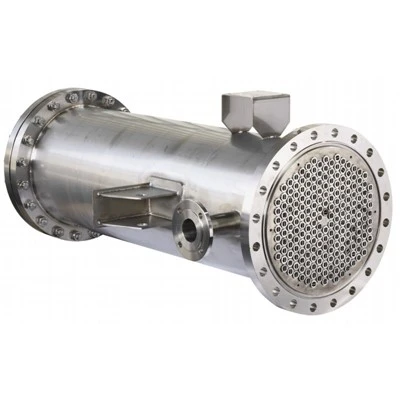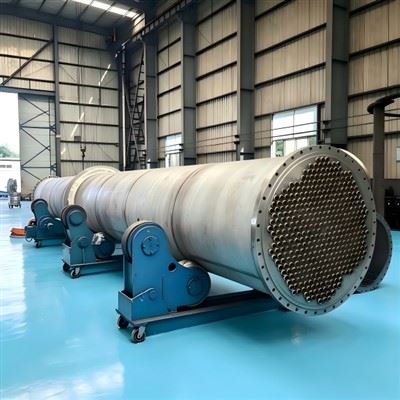

Engineered for Process Integration
Each exhaust gas heat exchanger is developed through a practical project workflow:
Communicating → Confirming → Customizing
Our engineering approach considers the heat source, process requirements, structural design, insulation needs, and installation conditions. Optimized heat-transfer design and reliable fabrication help reduce fuel consumption and operating costs while supporting long-term equipment performance.
Custom Heat Recovery Designs
We provide tailored heat exchanger solutions for industrial process applications, using high-grade pressure-vessel materials, precise welding, and engineered thermal insulation. Custom designs are available to meet the process, layout, and operating requirements of each petrochemical heat-recovery project.


Exhaust Gas Heat Exchanger Specifications
Every exhaust gas heat exchanger is engineered based on actual process conditions instead of fixed universal standard sizes. GYRO custom-designs equipment tailored to on-site working parameters to recover usable waste heat, guarantee stable long-term operation and cut overall energy consumption simultaneously.
|
Design Factor |
Engineering Focus |
|
Exhaust conditions |
Gas temperature, flow rate, composition, and operating profile |
|
Thermal duty |
Required heat recovery and target outlet temperatures |
|
Heating medium |
Water, glycol, thermal oil, steam circuit, or other process fluid |
|
Pressure conditions |
Process-side pressure requirements and safe equipment design |
|
Gas-side resistance |
Optimized flow path to support efficient operation |
|
Heat-transfer surface |
Sized for heat duty, temperature approach, fluid velocity, and operating conditions |
|
Materials |
Selected for pressure-vessel service, temperature exposure, and corrosion risk |
Materials and Corrosion Resistance
Our exhaust gas heat exchanger designs use high-grade pressure vessel materials selected for the project's operating conditions.
|
Design Focus |
Engineering Approach |
|
Tube bundle and housing |
Material selection based on process requirements |
|
High-temperature service |
Optimized structural design and engineered thermal insulation |
|
Long-term operation |
High-quality materials and precision welding |
|
Changing operating conditions |
Custom engineering for the specified process duty |
Low-Backpressure Exhaust Gas Heat Exchanger Design
Back pressure of exhaust must be controlled during waste heat recovery from industrial exhaust gas. Excessive resistance inside gas channels will undermine operational stability, fuel utilization efficiency and the performance of associated equipment. Every exhaust gas heat exchanger we design is customized in compliance with allowable pressure drop limits and the operating requirements of the entire process system.
GYRO delivers fully customized designs with optimized structural layout, rational flue gas flow passages and precision manufacturing techniques. Our design balances high-efficiency heat transfer while minimizing unnecessary flow resistance. We comprehensively evaluate tube pitch, flow channel configuration and heat exchanger geometry to achieve a well-balanced low-pressure-drop design.
Heat Recovery Control and Integrated Options
Exhaust gas heat exchangers must accommodate fluctuating process operating conditions to guarantee consistent waste heat recovery and dependable long-term performance. We provide customized engineering support for EPC contractors, refinery owners and plant operators to coordinate equipment layout, operational parameters and overall process requirements.
|
Integration Requirement |
Engineering Focus |
|
Variable exhaust conditions |
Review operating requirements during project communication and confirmation |
|
Temperature management |
Coordinate heat recovery equipment with the required process conditions |
|
Limited installation space |
Develop a practical equipment arrangement for the available footprint |
|
EPC package integration |
Support design and fabrication requirements within the wider project scope |
|
Long-term operation |
Apply optimized structural design, suitable materials, and precise welding practices |
Exhaust Gas Heat Exchanger Applications
CHP and cogeneration projects
Recovering available heat from stationary generator and engine exhaust streams for plant utility or process use.
Biogas and renewable-energy plants
Supporting heat-recovery requirements associated with anaerobic digestion, landfill gas, biomass, and other combustion processes.
Boiler economizer duties
Using flue-gas heat to support boiler feedwater preheating and improve energy use across the system.
Furnaces, kilns, and process heaters
Integrating recovery equipment with refinery and industrial heating systems. OurExhaust gas heat exchanger are developed for demanding process applications.
Marine and offshore systems
Evaluating exhaust heat recovery for onboard hot-water or steam-related utility needs, subject to project operating conditions.
High-temperature process duties
Applying heat recovery to thermal-oil circuits and other industrial process-fluid heating requirements.
For particulate-laden or corrosive combustion exhaust, equipment design should account for gas composition, temperature, fouling risk, material selection, and long-term maintenance access.
Maintenance and Anti-Fouling Features
An exhaust gas heat exchanger must remain clean and stable to support continuous petrochemical operation. Soot, carbon, ash, and other particles in the exhaust stream can reduce heat-transfer performance and increase pressure drop over time.
We engineer each unit around the actual process conditions, including exhaust quality, operating load, fuel characteristics, and required maintenance access. Optimized structural design, suitable material selection, and precise fabrication help support dependable operation with lower routine maintenance needs.
|
Maintenance Focus |
Practical Consideration |
|
Deposit buildup |
Soot, ash, carbon, and particulate matter may collect on heat-transfer surfaces. |
|
Gas-path design |
Flow arrangement should balance heat recovery performance with stable operation. |
|
Inspection access |
Custom engineering can consider access needs for inspection, cleaning, and service. |
|
Material selection |
High-quality pressure-vessel materials help address demanding petrochemical operating conditions. |
|
Service planning |
Cleaning frequency should follow actual fuel type, exhaust condition, load profile, and operating hours. |
For projects with difficult exhaust conditions, we evaluate the maintenance requirements during the communicating, confirming, and customizing process. This helps align the exhaust gas heat exchanger design with site operating practices, turnaround planning, and long-term cost control.
Custom Engineering and Heat Exchanger Sizing
We engineer each exhaust gas heat exchanger around the actual process conditions, available space, and connection requirements. Project data should confirm:
- Exhaust gas flow rate, composition, and particulate condition
- Exhaust inlet temperature and required outlet temperature
- Heating-medium inlet and outlet temperatures
- Allowable exhaust backpressure and liquid-side pressure-drop limits
- Required medium, including water, glycol, thermal oil, process fluid, or a steam-generation circuit
Our workflow follows Communicating → Confirming → Customizing. We align thermal design, structural configuration, material selection, fabrication, and inspection with the operating requirements of the project.
Customized layouts accommodate requirements such as retrofit projects, skid-mounted units, limited plant space, and existing exhaust ductwork. For furnace-related heat recovery projects, our exhaust gas heat exchanger solutions for the petrochemical industry meet the integrated engineering needs of the entire thermal system.
Manufacturing Standards and Quality Control
Each exhaust gas heat exchanger is engineered for petrochemical service with documented quality controls throughout design and fabrication. We apply certified management systems, suitable pressure-vessel materials, and precision welding to support stable, long-term operation.
|
Quality Area |
Control Focus |
|
Quality management |
ISO 9001:2015 quality management system |
|
Environmental management |
ISO 14001:2015 environmental management system |
|
Occupational safety |
OHSAS 18001:2007 occupational health and safety management system |
|
Pressure-vessel work |
R Stamp certification and project-specific fabrication control |
|
Welding |
Qualified welding processes and precise weld execution |
|
Materials |
High-grade pressure-vessel materials with material identification and traceability records |
|
Inspection records |
Fabrication documentation and inspection records based on project requirements |
|
Pre-shipment checks |
Factory inspection and acceptance checks before delivery |
For projects requiring defined pressure-vessel construction, documentation, or inspection scope, we review the applicable requirements during engineering confirmation.
We maintain clear control of materials, welding quality, insulation construction, and final inspection so the exhaust gas heat exchanger can be integrated reliably into refinery, EPC, and industrial heat-recovery projects.
Exhaust Gas Heat Exchanger Selection Checklist
|
Selection Item |
Key Requirements to Confirm |
|
Exhaust source |
Identify whether the heat source is an engine, generator set, boiler, furnace, or industrial flue gas system. |
|
Fuel and gas condition |
Review fuel type, exhaust composition, moisture, sulfur content, particulate level, and corrosive condensate risk. |
|
Temperature and flow |
Provide exhaust inlet temperature, target outlet temperature, gas flow rate, and expected load changes. |
|
Backpressure limit |
Confirm the allowable exhaust-side pressure drop to protect engine output, turbocharger performance, and normal operation. |
|
Heat demand |
Define the required heating medium: hot water, steam, glycol, thermal oil, or another process fluid. |
|
Exchanger design |
Compare shell-and-tube, finned-tube, exhaust gas economizer, and flue gas condenser arrangements based on duty, fouling risk, and footprint. |
|
Corrosion protection |
Check acid dew point exposure, sulfur, chlorides, moisture, and low-temperature condensation conditions before selecting materials. |
|
Cleaning access |
Review access covers, tube bundle serviceability, soot removal needs, replacement gaskets, and maintenance intervals. |
|
Control options |
Assess bypass requirements for startup, low-load operation, temperature control, and exchanger protection. |
|
Installation details |
Verify available space, piping layout, connection sizes, support structure, and retrofit limitations. |
|
Quality requirements |
Confirm applicable project documentation, material traceability, welding quality controls, and required certifications. |
What Information is Needed for Custom Sizing?
|
Required information |
Purpose |
|
Exhaust source and operating conditions |
Defines the duty and gas-path design |
|
Exhaust temperature and flow data |
Supports thermal calculation |
|
Gas composition and fouling risk |
Guides material and maintenance planning |
|
Required heat-receiving process |
Defines the exchanger configuration |
|
Allowable pressure drop |
Protects connected equipment performance |
|
Installation space and connection details |
Supports customized fabrication |
We follow a clear project process: Communicating → Confirming → Customizing. Our engineering team provides customized exhaust gas heat exchanger support with ISO 9001:2015, ISO 14001:2015, OHSAS 18001:2007, and R Stamp quality credentials.
Hot Tags: exhaust gas heat exchanger, China exhaust gas heat exchanger manufacturers, suppliers, factory, Acid Gas Preheater, Column Bottom Product Heat Exchanger, Corrugated Tube Heat Exchanger, Feed Product Heat Exchanger, Finned Tube Heat Exchanger, U Tube Heat Exchanger